

Your rebid should always be about the future, with a new solution fitting the customer’s future needs.
But evidencing that solution by using real examples from delivery on your existing contract, showing the strengths and fit of your new solution to your customer’s needs, is a real strength for incumbents.
Other bidders can talk about other customers and other contacts. Only you can give specifics about what you’re already delivering for your customer on this contract.
But too many incumbent bid teams don’t have the information they need to make the most of this potential advantage when writing their rebid submission. Below. we’ll show you how you can get that information – it’s usually there to be found if you follow our process.
We’ve written elsewhere about how and why incumbent teams should collect, collate, analyse and use the data from their existing contract. But data alone isn’t everything.
What the rebid team also needs is a ‘contract story’ covering the whole period of the existing contract that shows:
• How the contract developed from implementation through to the present,
• What was actually done to improve delivery
• Initiatives undertaken to make a positive difference to different aspects and stakeholders of the contract
• How the team reacted positively to customer needs – whether one-off crises, or ongoing changes in requirements
• What new innovations or improvements were put in place
Ideally, these would also be aligned to data and measures showing their impact on delivery (see the chart below). But even if that ideal isn’t achievable, having a set of stories, vignettes, case studies and examples of how you’ve been active and positive on the contract to date will give you a much richer set of ideas and evidence to use in your rebid.
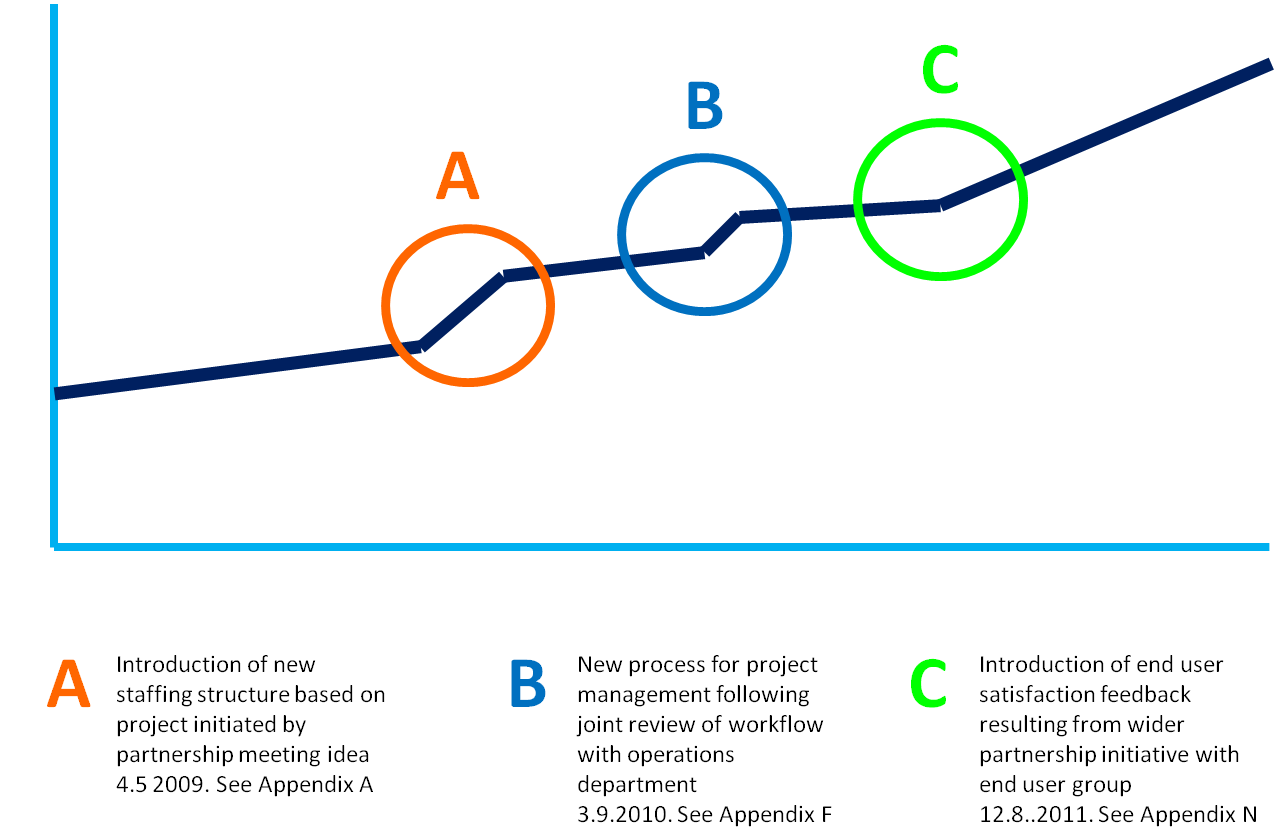
Finding these stories and putting them together into a rich and complete ‘contract story’ doesn’t just happen. It needs to be something the team proactively seeks out and puts together in a coherent and planned way to get the most information, from the most sources, in the least amount of time.
Here are some of the methods we’ve used to successfully build a contract story full of examples that can be used as evidence to support the rebid submission.
Start at the beginning of the contract
We recommend good news stories, annual summaries of improvement, and other innovations are a constant part of ongoing communications with customers throughout the contract. Getting the customer ‘on side’ early and keeping them there will always help when the rebid is approaching. See here for our summary of types of communications you can use during the contract to improve customer relationships and support your rebid.
Having these communications available to the team preparing for the rebid means they don’t need to be uncovered or remembered by an operational team that could have changed, forgotten, or don’t recognise what they did in the past as good news stories.
Focus early in your rebid preparation
Often the rebid team don’t have the luxury of a contract which purposely collected and communicated good news stories as the contract has progressed. If so, starting this work at the beginning of the rebid preparation period gives you time to uncover and pull together the stories and information you need to produce convincing evidence.
Start at your initial rebid preparation or ‘kick off’ meeting. We hold these around 6 months prior to when the PQQ / OJEU/ RFI is expected, to give your rebid preparation programme (or Recapture Plan as we call it) time to properly prepare to win.
By bringing together the operational team, the bid team, and others who will be involved in the rebid, you create an early focus on the rebid. It gives you time to collate the things you know, and realise those you don’t know about the contract, customer and forthcoming rebid, creating the start of a plan for the coming months.
As part of this meeting ask the team about the history of the contract. Go through it year by year asking about the main improvements, changes etc., Start from the very beginning of the contract and how the implementation went.
From this initial question you’ll, hopefully uncover a few initiatives. But inevitably there will be more to find. To focus thinking, ask about some specific areas: what happened and was done relating to them. Some will only be relevant to your own area or sector, but general things to ask about, to ‘jog memories’ might be:
• What customer requests for change did we have?
• Did the customer have a particular issue at any time that we helped them deal with?
• Have we changed how we deal with customer staff in any way?
• What about end users – have we reacted to any feedback from them?
• Have we put any of our own staff ideas in place at any time on the contract?
• Have we completed any training initiatives with our staff?
• Have we put any new systems or processes in place during the contract?
• Have there been any awards or accreditations gained by the contract?
• What new technology have we put in place in the contract?
• Have we done anything regarding social value or the environment?
You may not get positive outcomes from every question, but some may remind people of initiatives or ideas that will add to your list. As you add more specific questions relevant to your particular type of business or contract you’ll probably unearth more.
For each initiative, ask the usual questions of why, what, how, who, when and where to get the detail (or find out who knows the detail) so you can build a richer picture of the change or improvement. And make sure you ask about the impact the change had – and whether you can find any evidence of that (in the data, KPIs, reports to the customer, letters or comments from customers or others).
Even problems can be useful
Don’t just focus on the positive. If there have been problems on the contract, you need to know. Even if the team thinks the customer has forgotten, they probably haven’t. You need to understand what problems have occurred, why and what the impact was in order to have a clear context in which to place your rebid.
But problems in the contract can actually be useful in a positive way. Knowing the issues the contract has faced (and may face in the future) might impact on your solution – helping you put in place things to prevent or mitigate these problems in the future. Being open about issues, showing you understand them and have a solution for them, can work in your favour. Especially if your competitors don’t know they might occur (assuming of course they are issues with the contract and its context – not your own business, delivery or way of working).
And if you reacted well and resolved the issue quickly, you can turn this into a story about flexibility, and your willingness to react and address any contract problems – a positive if the customer thinks potential issues could occur in the new contract (which they inevitably will).
Check and get more perspectives
Once you have your initial version of your contract story, and set of initiatives undertaken, check with other sources to find more, get different perspectives, to add detail and verify your findings. Talk to managers and staff in the contract; past managers if theyre still in your organisation; end users if you get the opportunity. All might add new detail and perspectives, as well as add to your list.
Talk to the customer. They might have a different perspective on what you’ve done, and you need to understand this. They might not recognise as important or significant some of the things others have identified. On the other hand they might have been impressed by something people internally thought of as minor. Talk to different people within the customer if possible – different customer stakeholders may have been impacted differently by changes and have different perspectives. Knowing these will help you position your different initiatives in your rebid.
There’s another advantage to talking to the customer about the changes and improvements on the contract. Particularly if you show them what’s been gathered to date and are checking with them about the initiatives you’ve identified. It could be the first time the customer has seen all these things in one place. It might remind them what you’ve achieved throughout the contract. And while your primary aim at this point is not to be selling to the customer, this reminder won’t hurt. When they see these again in the rebid, they’ll already have acknowledged them.
Whilst some people disagree, our view is you shouldn’t put too many surprises in your rebid that you could have pre-checked with the customer about. If the customer sees a claim about your previous performance on the contract for the first time in the rebid, they may not fully believe it, and you might not get all the credit you could for it.
Focus on the benefits
As you collect your stories, make sure you focus on the benefits each initiative and action delivered to the customer. As with all things in your submission, what you write should be focused on the customer, not you. Its the same with your Contract Story.
Make sure you understand, and where possible have evidence to back up, the benefits to the customer. Remember your focus isn’t to describe what you did, but to show what that delivered to the customer which was important to them.
Decide where you can best use elements of your contract story in your rebid
Once you’ve pulled together your contract story, and have a good set of initiatives and improvements you’ve put in place throughout the contract, think where best to use them in the rebid.
Which points will best evidence different parts of your rebid submission?
Once you get the ITT/ RFP, look at which questions your evidence will best support the answers to. Make sure you know which the strongest points are, which support your key win themes and which may illustrate particular points you want to make.
One option is to use an overview diagram to summarise the volume of changes made (we’d expect more than included in our example below, and you might not include those seen as negative in your final submission):
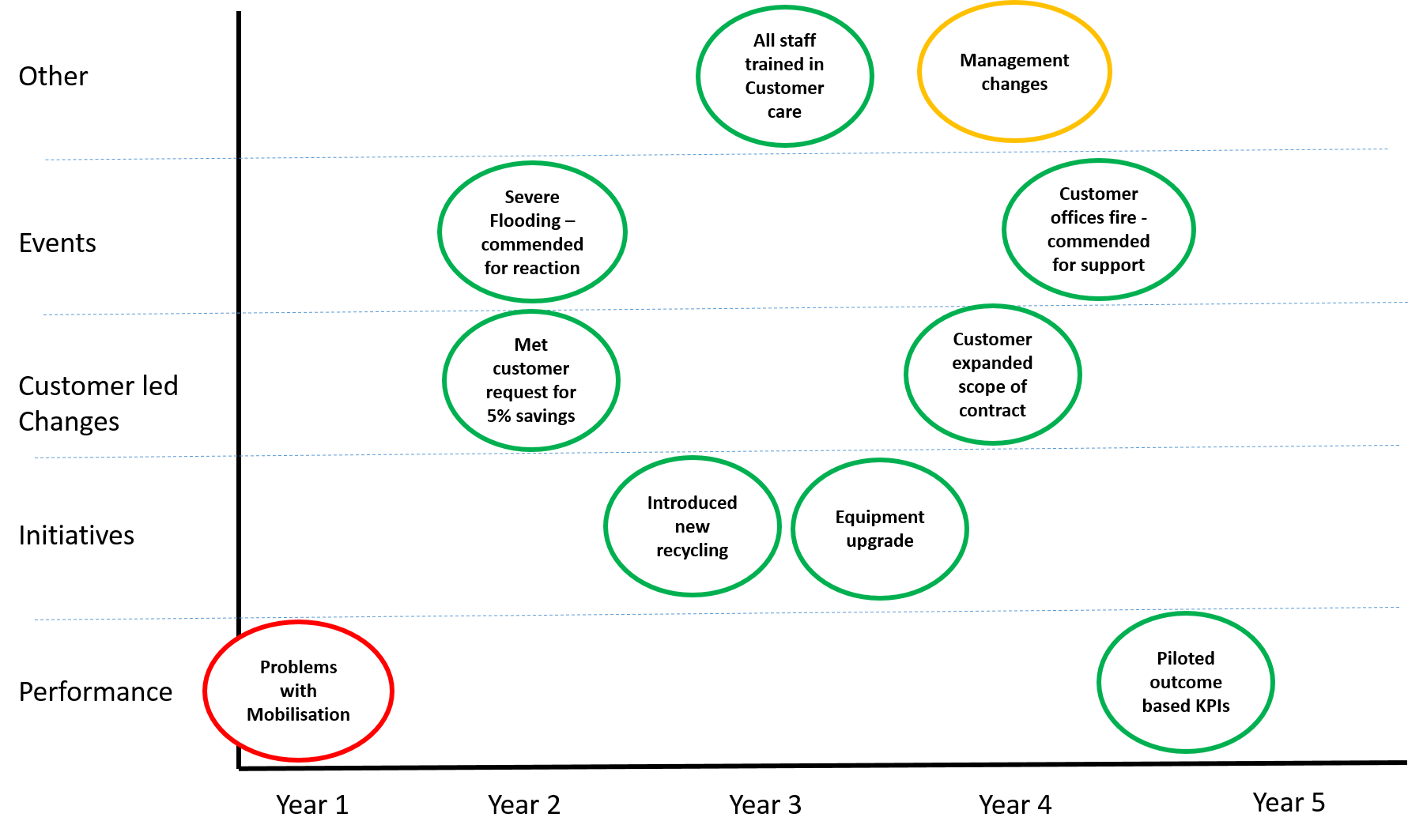
For each summary point in your diagram, you should have a short ‘story’ with more information and data to evidence why this is a positive and the benefit it delivered to the customer, which you can use in the appropriate answers as evidence. Ideally key points can be evidenced by something in your performance data to date. This will really add to the power of your arguments and solution.
But remember – these are only part of the equation of your rebid. You want the focus of your rebid to be about the future, not the past. How you’ll deliver an exciting new solution meeting the customer’s needs for the next contract period.
Use the examples to evidence your customer focus and knowledge of their needs driving your new solution and ability to deliver in the future.
Do this well and you’ll have a rebid set up to win.
See how we can help you create your contract story, and put in place all the preparations you need to win your rebid. Contact us to schedule a call.


